
A new rules package was announced by NASCAR on Wednesday for the Coke Zero Sugar 400 at Daytona International Speedway next month. The changes aim to promote more passing and reduce emphasis on fuel saving.
The most visible difference to NASCAR Cup Series cars will be the shortening of spoilers from seven inches to four inches. The cars will also have horsepower reduced from 510 to 465, which NASCAR says accounts for the lower downforce of the spoiler adjustment.
Cars are expected to run three miles per hour faster during single-car runs. Speeds in packs should remain about the same. Daytona’s new spoiler heights will now match the four inches of the series’s intermediate track package. With less air hitting the spoiler, reduced drag may allow the cars to be somewhat more fuel efficient.
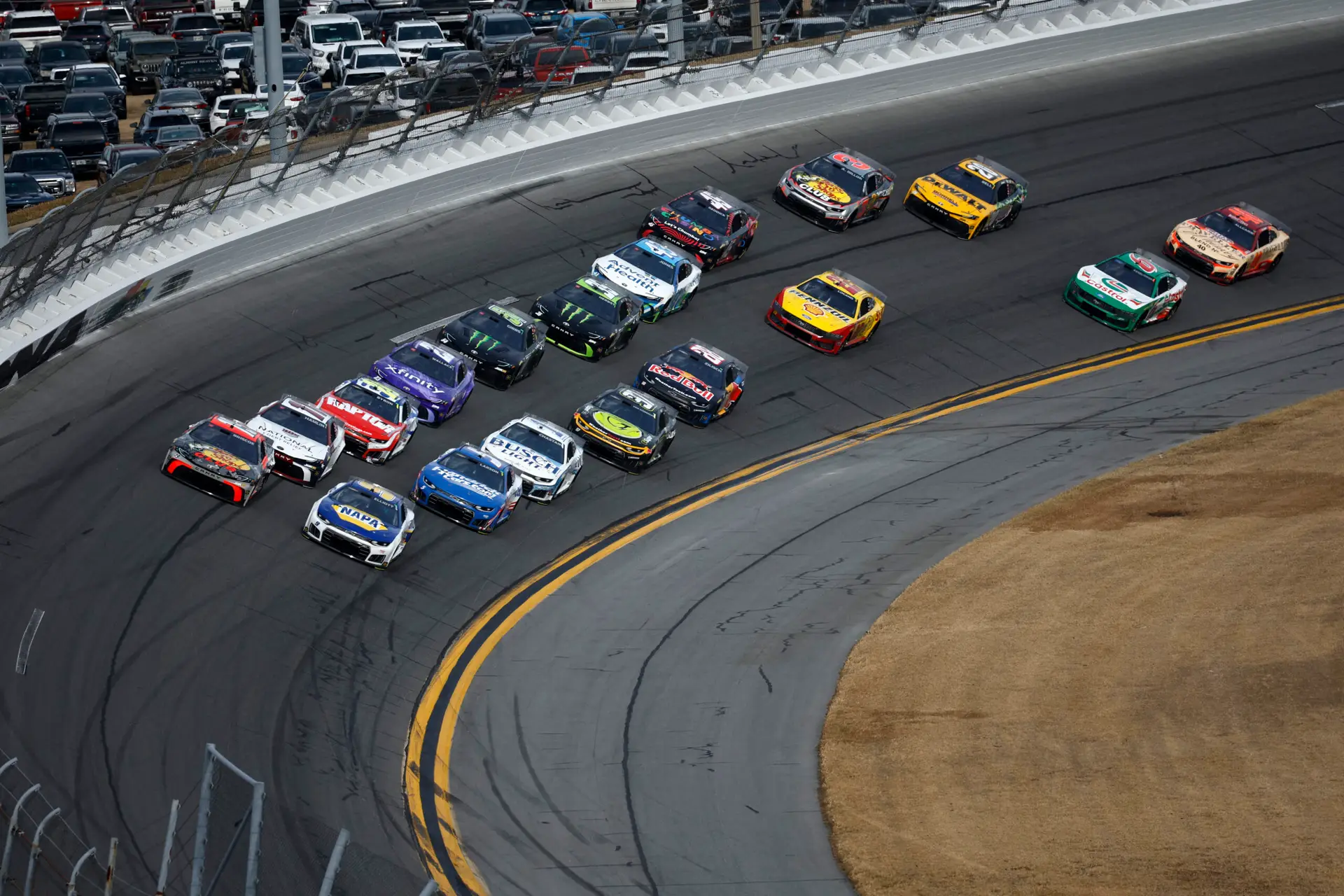
“When I watch superspeedway racing currently, it seems like the leader is basically at terminal velocity,” said veteran crew chief and analyst Steve Letarte. “It’s very easy to get a run on the leader and very hard to do anything with it. You pull out of line, you hit this wall of air, and for that reason, they’re just kind of stuck two-wide around the bottom. When superspeedway racing is most entertaining for me, it takes more work to generate an advantage or a run. But when you do generate that run, you are paid off in a dividend of overtaking. And really, I think it’s as simple as that.”
Fuel mileage racing has become a common pet peeve among fans at Daytona International Speedway in recent years. Drivers have been shown to drive much of the race at less than full throttle, seeking to optimize their pit strategy instead.
Blueprint: Atlanta
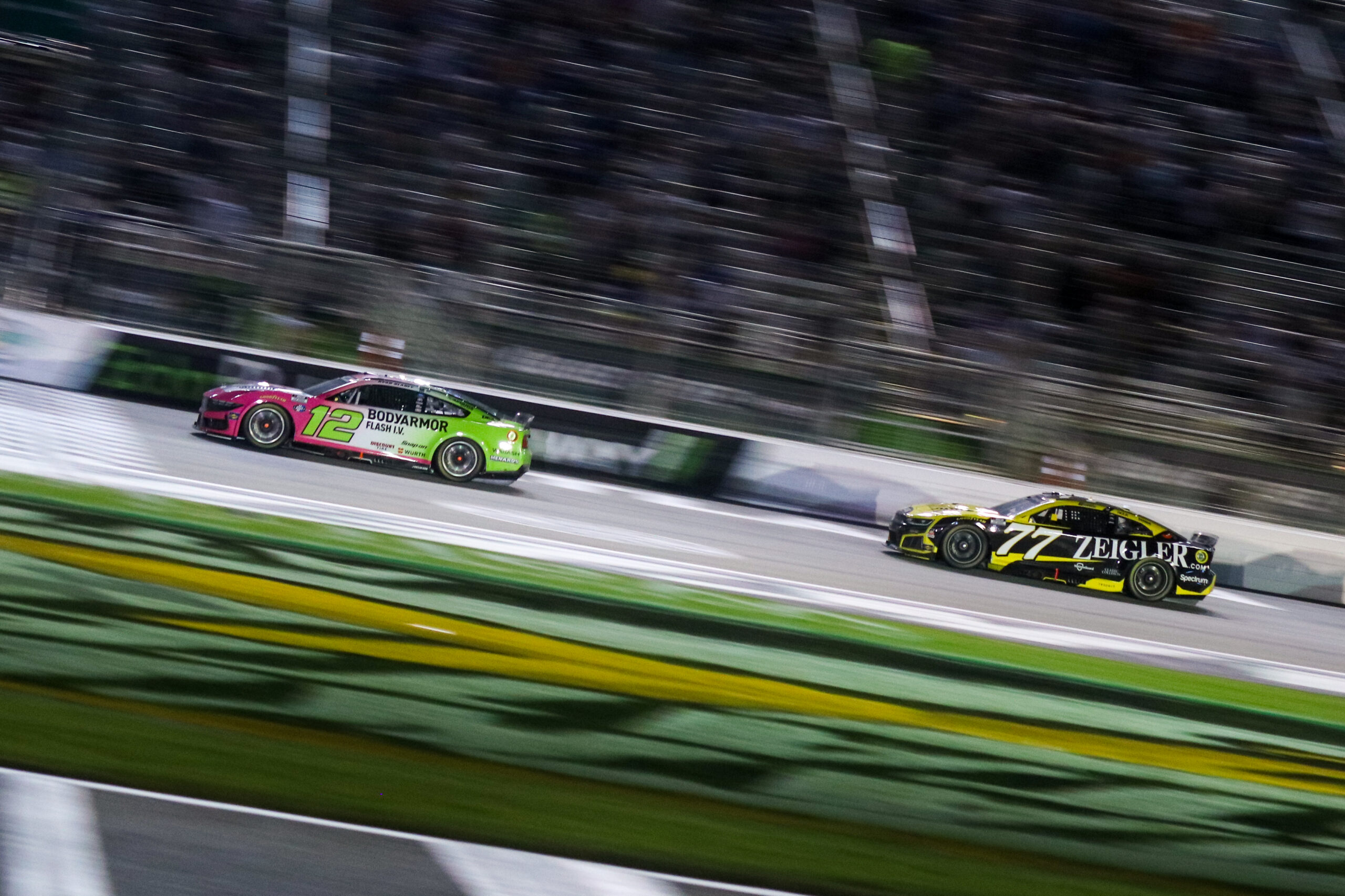
The racing product at EchoPark Speedway in Atlanta on Sunday appears to have been an inspiration for Wednesday’s rule changes. At least one top NASCAR competitor believes outcome could be a Daytona race that more closely resembles Atlanta.
“What we’re essentially trying to recreate is Atlanta at Daytona and Talladega,” said owner-driver Denny Hamlin. “It happens organically at Atlanta, the space between the cars, because the cars themselves are grip-limited, and the fuel-mileage [racing] really doesn’t happen because you have to be on offense constantly. If you watch the pack, there is no saving. Guys are dicing it up the entire race. So this is what we’re aspiring to get to at some point. And it’s going to take chunks here and there. This is our first bite of the apple at this, so what I believe is that from the numbers that I’ve seen, it’s going to be roughly a 33% gain in the right direction.”
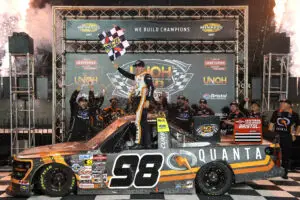
Since its repave in 2021, Atlanta has become an instant fan favorite. It’s produced instantly iconic moments including the closest three-wide finish in NASCAR history. Sunday’s Quaker State 400 added another chapter to the track’s hot streak, with an electric battle for the win between Ryan Blaney and Carson Hocevar.
Regular Season Finale
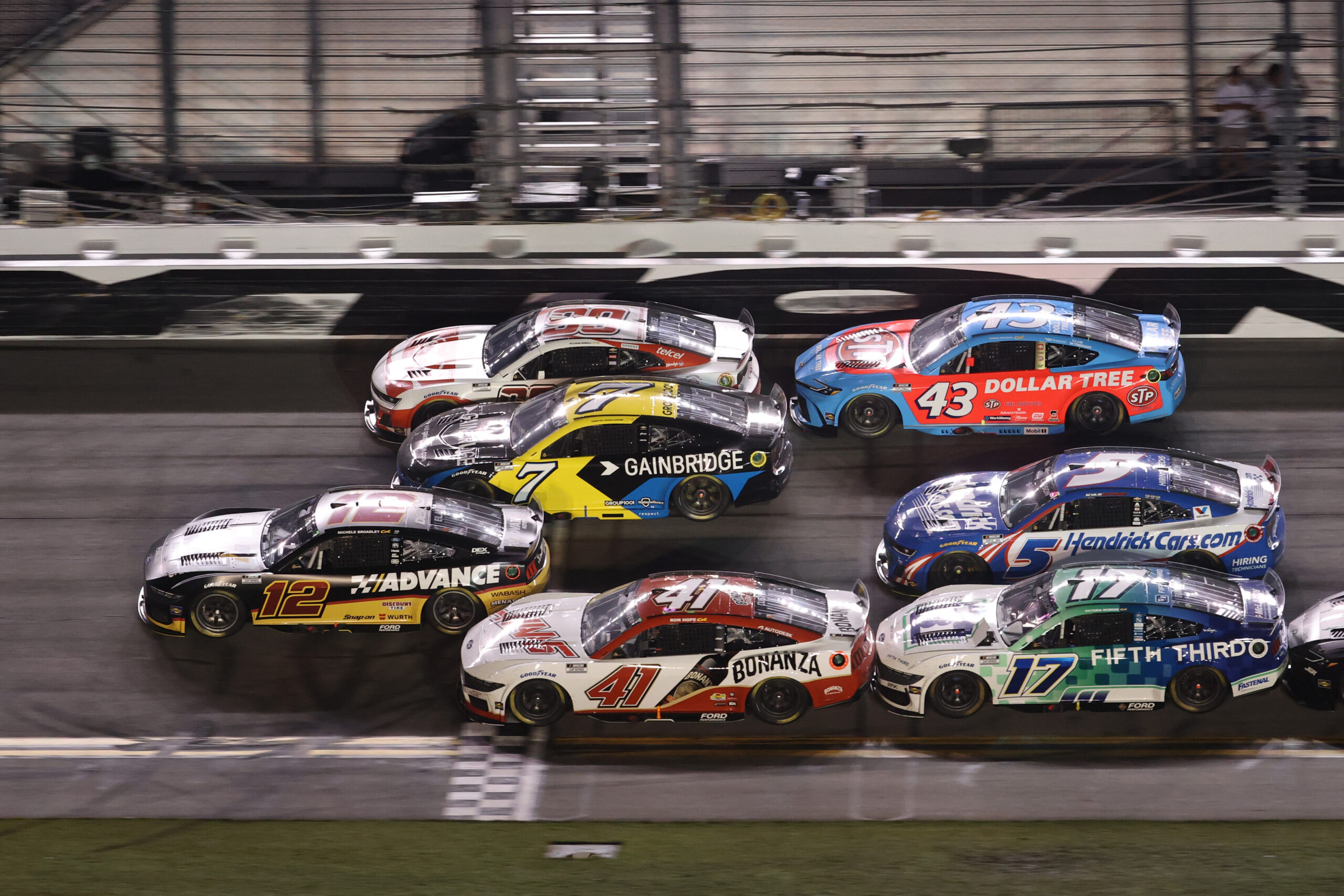
When the field takes the green flag at Daytona on Saturday, August 29, it’ll be several drivers’ last chance to earn a spot in the 2026 Chase. The urgency of that moment could open the door to electric racing. The key to capitalizing on that opportunity, Letarte says, is to promote opportunities to pass.
“I think what I see currently is our biggest track-position races of the year are the superspeedways,” Letarte continued. “That’s never been their signature. And we can talk about fuel and strategy, but the garage is going to try to win the race. So if the strategy demands track position, they’re going to do everything to get it. If the aero changes can allow teams to overtake to have faster cars and slower cars, I think it could open up the field a little bit and have just varying-speed cars because right now they all look like they run the same speed.”
“As you’ve seen with NASCAR over the last few years, since the Next Gen, they’re not afraid to just keep fine-tuning it and getting it good at all these race tracks,” Hamlin continued. “We’ve seen them make some horsepower adjustments on the short tracks in order to make those and road courses race better. Intermediates obviously speak for themselves; they don’t need a whole lot with how well the Next Gen races there. But then the next step is OK, let’s work on our superspeedway package from here on out. So I think that this was a great collaborative effort to get the racing product as good as it can be for the fans.”