
NASCAR fans know all too well what this 25th anniversary commemorates, and it’s the sport’s darkest day.
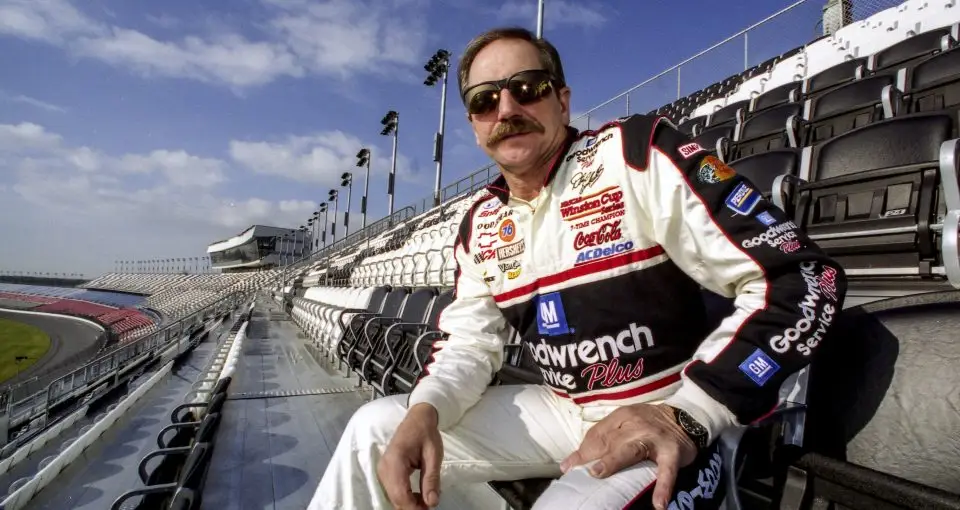
Seven-time NASCAR Winston Cup champion, Dale Earnhardt, lost his life in a crash on the last lap of the 2001 Daytona 500. The biggest race of the year rapidly became the day fans would want erased from their memory. Earnhardt was not only one of NASCAR’s most accomplished drivers in its 50-plus-year history, but he was widely considered the man thousands would travel to see. The iconic black No. 3 Chevrolet paired with the dark sunglasses and mustache, Earnhardt was appropriately nicknamed the “Intimidator.”
Just like that, he was gone. A sport was left without it’s box office main attraction. NASCAR spent the next 48 hours in a daze. Why Dale? How could this have been prevented? Where do we go from here? It’s safe to say pro sports leagues don’t have a contingency plan for something like this. The first big change came from the owner of Earnhardt’s No. 3, Richard Childress, who took the car off the track. He tapped Kevin Harvick to drive the newly-numbered No. 29, and help pick up the pieces of a shattered organization.
Harvick would never be Earnhardt, but in a way, he was the perfect understudy. Harvick drove with the same intensity as the late Earnhardt, and would not be pushed around by anyone on or off the track. The Intimidator may not be here, but the “Bakersfield Basher” helped give fans hope for the Goodwrench-sponsored No. 29 to carry the torch.
Richard Childress Racing had begun their healing process, but NASCAR was still in a state of shock.
The immediate problem to solve was the safety of both the cars and the track. Earnhardt was notorious for sticking to what he knew best, and did not comply easily to safety changes that would hinder his driving style. For instance, Earnhardt began and ended his career wearing an open-faced helmet. When head-and-neck supports (HANS) were being developed and worn by fellow competitors, Earnhardt relished in the thought his opponents were more fearful of being hurt than he was.
“In our last conversation, Dale came up to me (prior to the 500) and ridiculed me for wearing it,” Brett Bodine said in an Autoweek article on the matter.
After the crash, the HANS device was made mandatory for all competitors, and the driver’s seat was redesigned to help keep the driver’s head cushioned and protected from side-to-side collisions.
When Earnhardt crashed, the front of his car hit a concrete wall at over 170 mph. The combination of a stiff wall and a car that did not properly displace the impact energy led to the catastrophic outcome. Dr. Dean Sicking and the University of Nebraska created the Steel and Foam Energy Reduction (SAFER) barrier. Now, when the cars have an impact with the wall, the steel barrier gives into energy-absorbing foam blocks that take the blow of the impact away from the driver. Since it’s founding, no NASCAR driver has had a fatal head-on impact to the SAFER barrier.
NASCAR spent the next five years building a car with safety as the top priority. With energy-absorbing foam in the doors and a more crumple zones that take any of the impact away from the driver. The result was the “Car of Tomorrow,” and after multiple moments of heart-stopping collisions and barrel roll crashes, no driver was seriously hurt.
The Earnhardt fans lost their driver, but it did not take long for them to find their next man: his son, Dale Earnhardt Jr.
Earnhardt Jr. not only carried the name of his late father, but he also drove for his father’s team, Dale Earnhardt Inc. What followed was Earnhardt Jr. winning 15-consecutive NMPA Most Popular Driver awards, two Daytona 500s and six wins at Talladega Superspeedway. Earnhardt Jr. carried the weight of a hurting fanbase, and rewarded them with a Hall of Fame career.
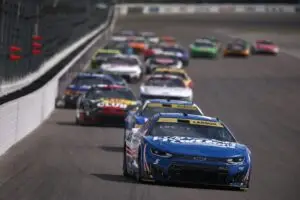
So here we are, 25 years later. NASCAR is now running the NEXTGEN car, which has adapted the same safety aspects of the Car of Tomorrow. Childress has brought the No. 3 back to the track, driven by his grandson, Austin Dillon. Earnhardt Jr. is in the Hall of Fame and remains heavily involved with the sport as both a broadcaster and team owner (JR Motorsports). Perhaps the best piece of news, no driver has lost their life in a NASCAR Cup Series car since that day.
The scar, however, is still there. No matter how much good has been done, it will never go away. Every February, it brings out emotions that are otherwise suppressed deep within. No one looks at Daytona International Speedway the same, even if it was Earnhardt’s favorite track. Fans in their Goodwrench and No. 3 merchandise find it hard to hold back the tears as they pull in to the speedway for what’s supposed to be the most exciting and happiest day of the year: Daytona 500 race day. NASCAR can change the car and make the tracks safer, but it can’t bring the Intimidator back.
It’s a sad memory, yes, but scars are examples of growth. It’s a reminder of where NASCAR was, and where it is today. It is a significantly safer sport, and that allows fans to tune in each week to cheer on their heroes each and every week. The drivers have all kept Earnhardt’s legacy alive by racing every lap like it’s the last, not giving an inch, and “rattling the cage” of their opponent, as the late Earnhardt once said. NASCAR has progressed in leaps and bounds in the positive direction, and they do so with their fans at their side. As the gates open to Daytona, another season will start. NASCAR and the fans will enter the arena with the unified decree: “Raise hell, and praise Dale!”