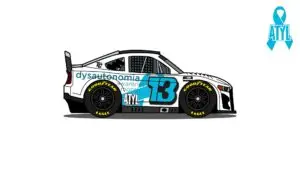

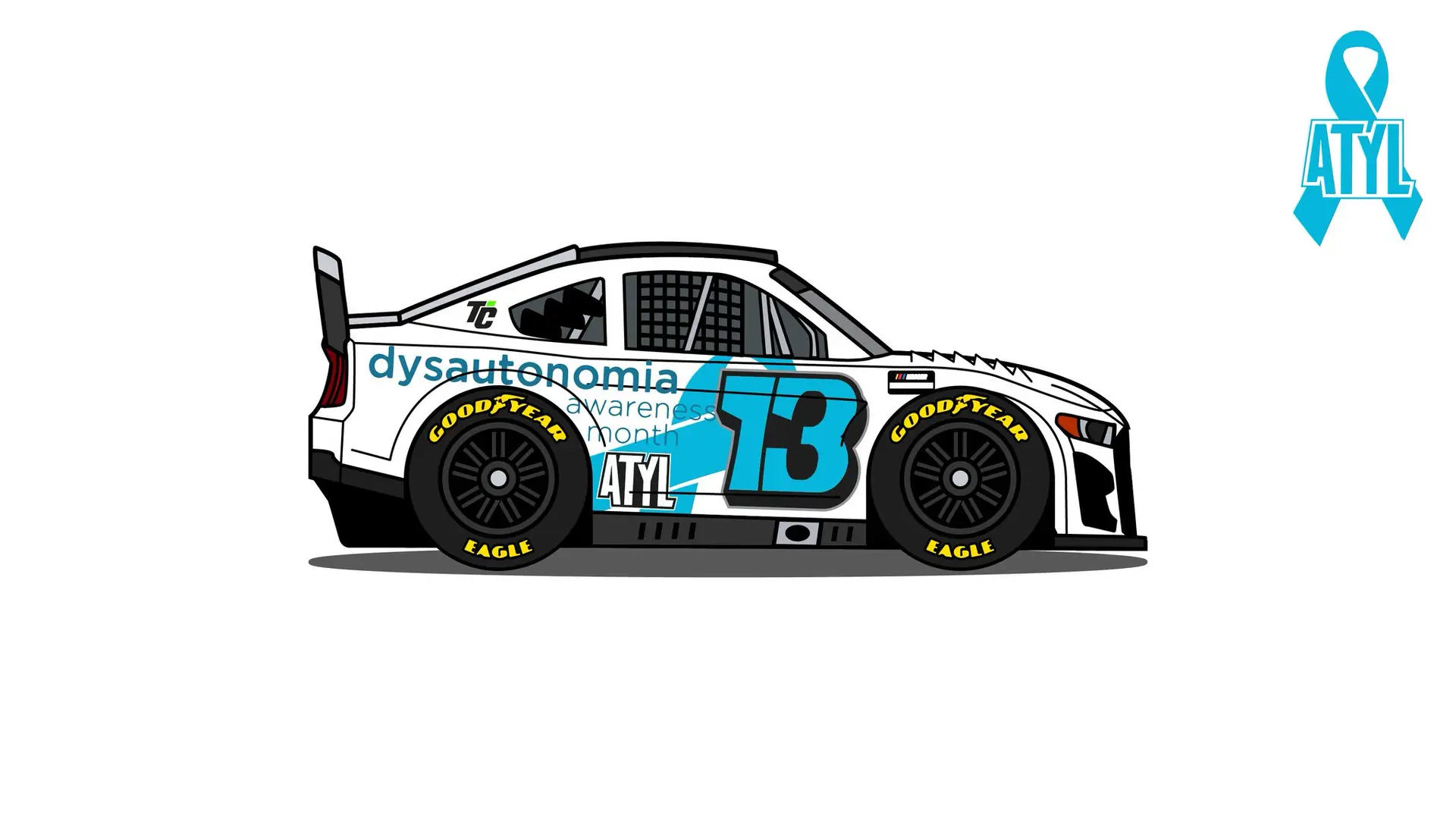
October is Dysautonomia Awareness month, a chronic condition that impacts over 70 million people across the globe. It is a nervous system disorder that disrupts autonomic body processes, leading to life-altering symptoms and comorbidities.
This month, ATYL Media will raise funds for Dysautonomia International, a non-profit organization dedicated to the advocacy, advancement, and awareness of dysautonomia care and research.
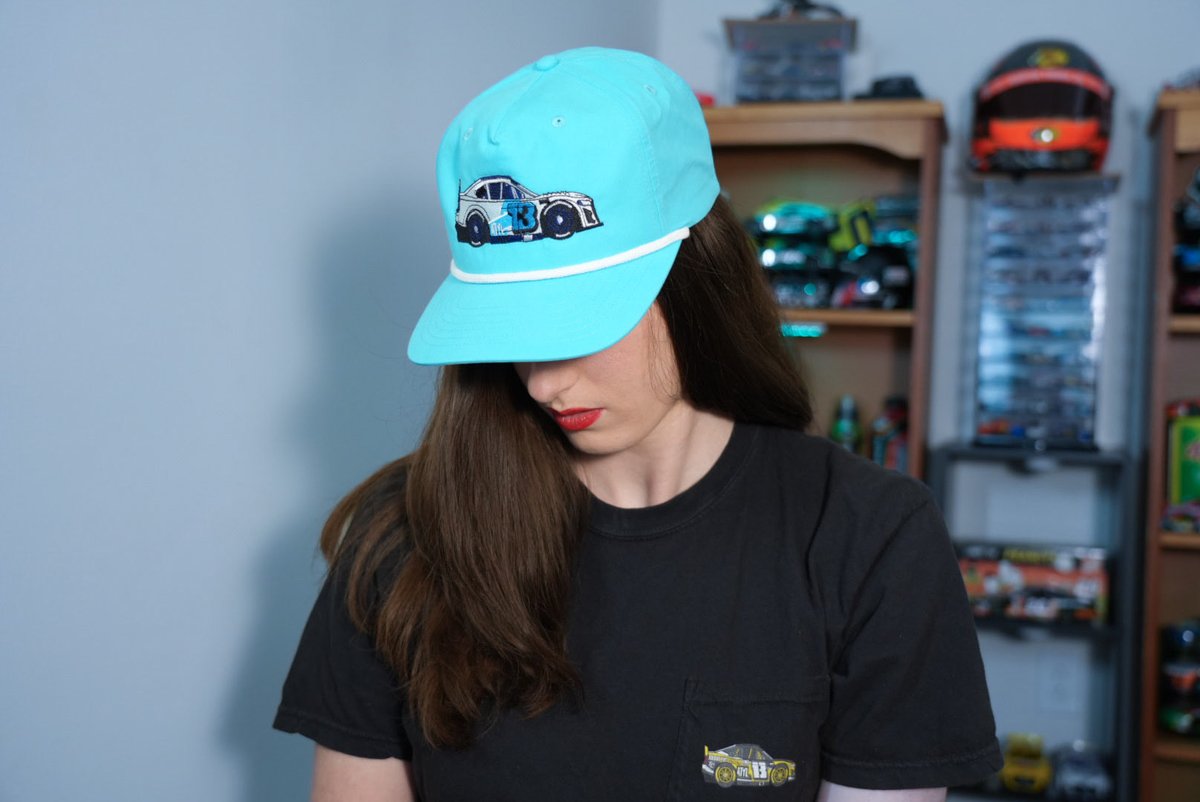
Readers can do so by donating through THIS LINK, or by purchasing one of our exclusive Dysautonomia Awareness Month hats on the ATYL Media store where all gross proceeds will go directly to Dysautonomia International. Readers can find all of this linked at the bottom of this page.
What’s the significance? Well, for ATYL Media founder Taylor Kitchen, this is an illness that has greatly impacted her life. More than that, it’s a condition that has shaped who she is today.
This is her story:
Taylor’s Story
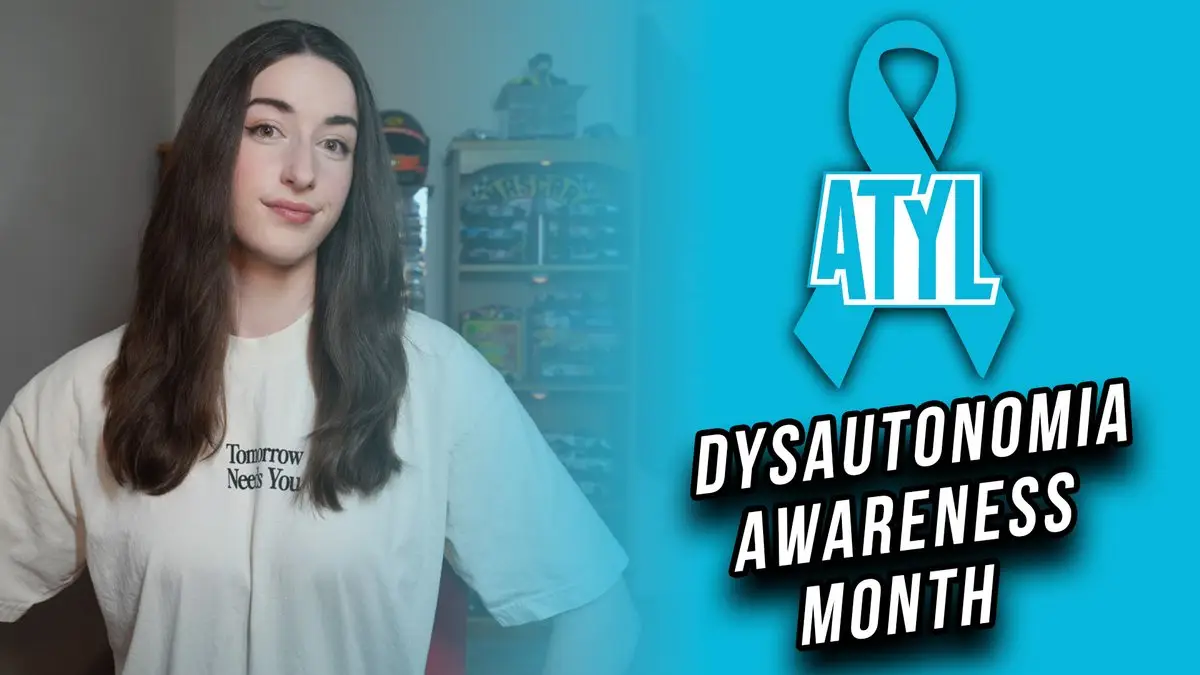
Sometimes, life is bigger than racing and I certainly learned that in 2018 when my body started to fail me.
I had just started my first semester of college, and I had no clue what was going on. A lifetime of odd symptoms had grown to a level where I could no longer function. I felt lightheaded and faint most days and struggled to keep my health in check.
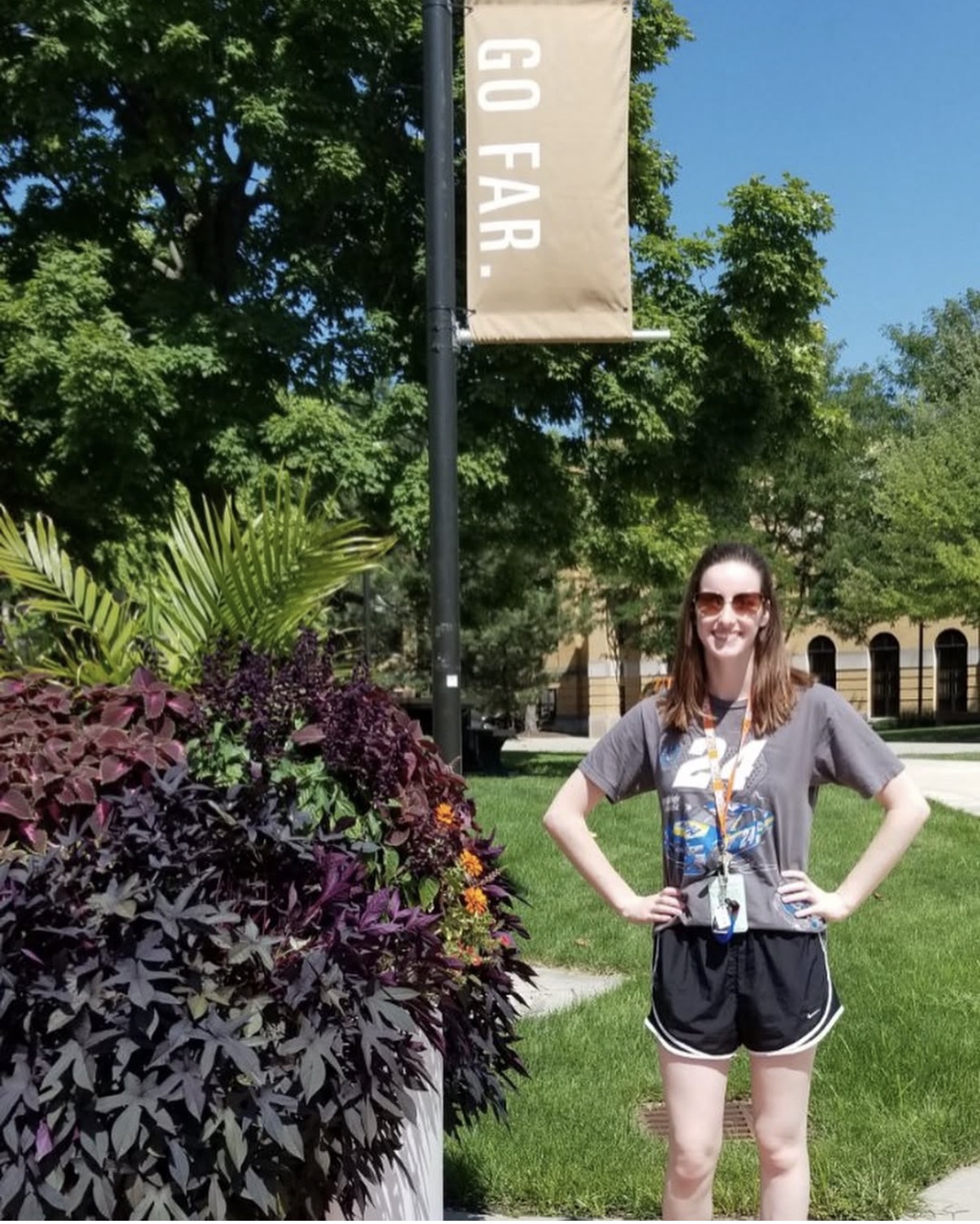
Over the span of months, the severe stomach pain and nausea this mystery ailment produced caused me to lose 45lbs. My weight got so low, I was sent to an eating clinic to try and regain some of what I had lost. It was so bad I had to learn to eat despite the pain. I saw my resting heart rate skyrocket to over 120 beats per minute. Additionally, I grew increasingly intolerant of any type of moment as it further increased my already high-resting heart rate. I was weak, dealt with horrible migraines, and struggled to maintain my day-to-day life.
Before I knew it, my first attempt at college was cut short by a mystery illness that left me bed-bound for almost a year and a half.
The search for answers begin
Once home, my parents took me to countless doctors, all of whom had zero answers. I underwent dozens upon dozens of medical tests along with a surgery, all in an effort to find the root of my chronic pain. I tried a slew of medications, tried naturopathic medicine options, and doubled down in therapy. Still no answers and unfortunately, was told that the scary symptoms that had drastically reduced my quality of life were all in my head.
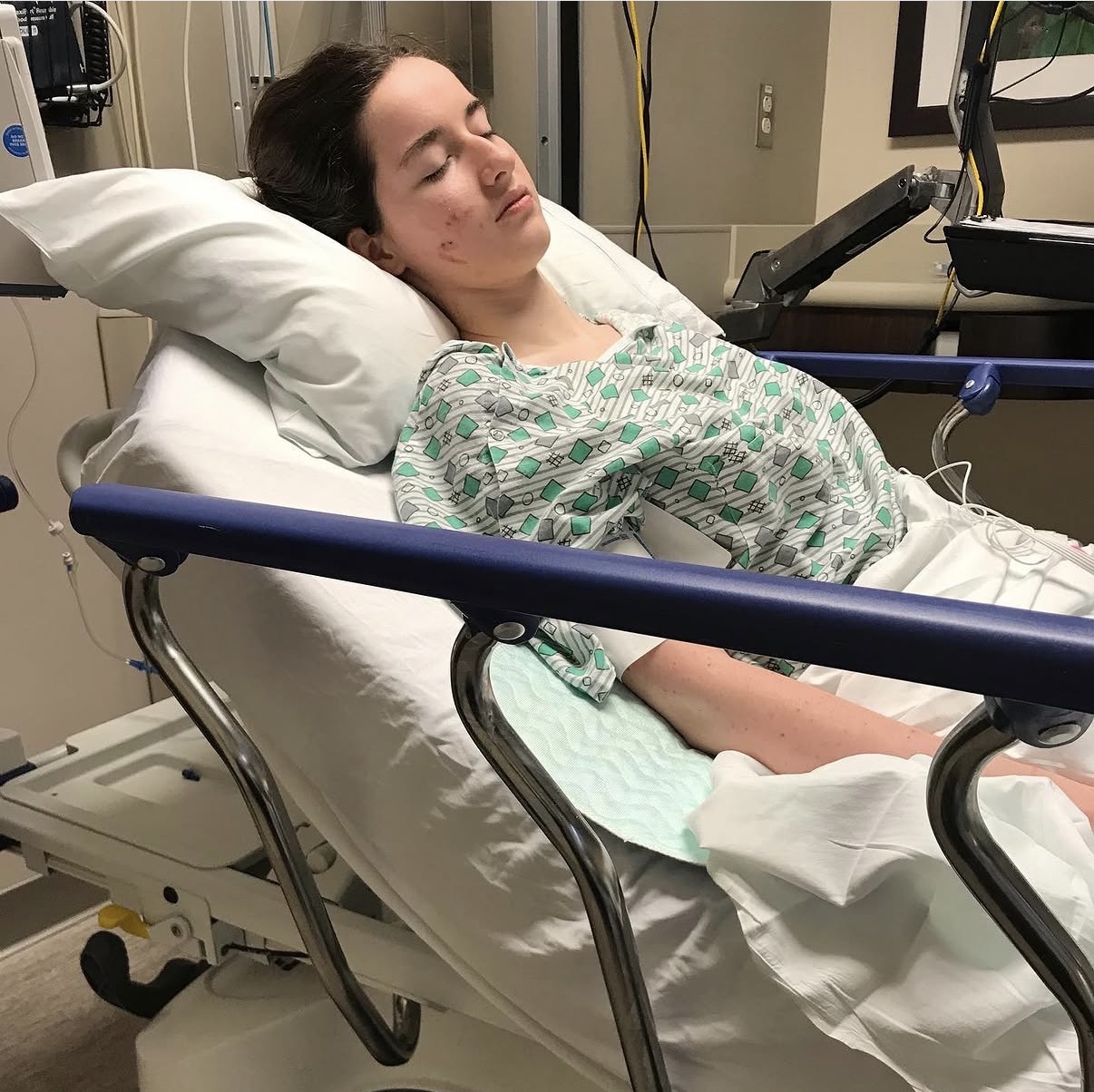
I felt hopeless. Yet, I was reluctant to accept the fact that this was my life. After living 19 years of my life up to that point, I knew my body and knew this was not right. I have lived with panic disorder, major depressive disorder, and other mental health challenges. Because of this, I knew what felt normal and what didn’t, but I failed to find answers.
Then, one day in the middle of 2020, I woke up and went to yet another new doctor. At that point, this had simply become routine, and I expected nothing to come from the appointment. To my pleasant surprise, I was wrong.
This doctor took one look at me with fresh eyes, read my vitals and said, “Have you heard of POTS?”
Naturally, I told her no and assumed she was talking about pots and pans in the kitchen.
She then explained that POTS is an acronym for postural orthostatic tachycardia syndrome. It’s a condition involving dysfunction of the autonomic nervous system. One of the defining characteristics is a significant increase in heart rate when moving from a horizontal to an upright position.
She shared that POTS is a form of dysautonomia, a group of conditions that affect the autonomic nervous system. That system controls many of the body’s automatic functions. This includes functions like blood pressure and heart rate. When those functions don’t work properly, it can create a cascading effect of symptoms. These range from chest pain and shortness of breath to fainting, gastrointestinal issues and more.
At that appointment, my doctor made an urgent referral to the Cleveland Clinic’s Neurological Institute, which houses a dysautonomia clinic. By fall of that year, I had an appointment with a new doctor who performed orthostatic blood pressure and heart rate readings.
Essentially, they took my blood pressure and monitored my heart rate while I was lying down, sitting and then standing over specific intervals of time. My blood pressure was unstable, and my heart rate skyrocketed past diagnostic measures. At that moment, I was diagnosed with POTS.
I was told POTS does not have a cure, only treatments and lifestyle changes that can help alleviate its symptoms and some of their causes. The harsh reality set in: I had a chronic illness that would impact me for the rest of my life and it didn’t have to get this bad.
Why advocacy, awareness, and advancement matters
To know that all it took was a doctor who knew the symptoms and a simple diagnostic test to get an answer was incredibly frustrating. I spent years of my life in discomfort and pain. I still do. But to know there was an answer out there, and ways to manage the condition if someone simply knew the signs, was heartbreaking.
From that point, I made it my mission to tell my story and spread awareness whenever I could so that finding a diagnosis and treatment might be easier for those who come after me.
Sharing your story is scary. It’s uncomfortable and vulnerable. But if it helps one person feel less alone and brings them one step closer to resources or a direction, I am happy to do so.
What Dysautonomia International is
This led me to Dysautonomia International, a nonprofit organization dedicated to the advocacy, advancement and awareness of dysautonomia care and research. It became a great starting point for me to learn more about the chronic condition, hear from experts and understand the research surrounding the disorder at the time. Better yet, the organization helped me find a community of people who were also searching for answers and guidance.
I learned so much. I learned about increasing my sodium intake to help raise my blood volume and reduce lightheadedness caused by blood pooling. In the same breath, I discovered that compression socks would become my best friend. Meal time meant I needed to be mindful of what I ate as an overload of carbohydrates would send me into an episode (because digestion can redirect more blood flow toward the stomach, which can worsen symptoms for some people with POTS).
The depth of what was learned was because because of Dysautonomia International and, perhaps more importantly, the community they helped bring together. Finding people who understood what I was experiencing made me feel less alone and gave me tools to better navigate a condition I was still learning to understand.
I also learned through this experience, and through the many visits with my new doctors, that POTS is often a condition that doesn’t come alone. Once I received that diagnosis, it opened the floodgates to new diagnoses that go hand-and-hand with my POTS, all impacting one another.
It led to the discovery of several other chronic conditions and diagnoses related to my veins and arteries that have impacted my POTS. To this day, I am still undergoing medical testing and learning more and more, just as medical professionals are learning more and more about these conditions.
But now, with the awareness being spread by others and organizations like Dysautonomia International, there is more research happening, more dots connecting and more hope for people living with these chronic conditions.
Finding my footing again
After receiving my diagnosis in 2020, I started learning more about what I needed to do to best support my body. I was also prescribed medication to help manage my heart rate. With my heart no longer racing like a horse all the time, combined with other treatments and lifestyle changes I discovered through my doctors, I started to feel like myself again for the first time in years.
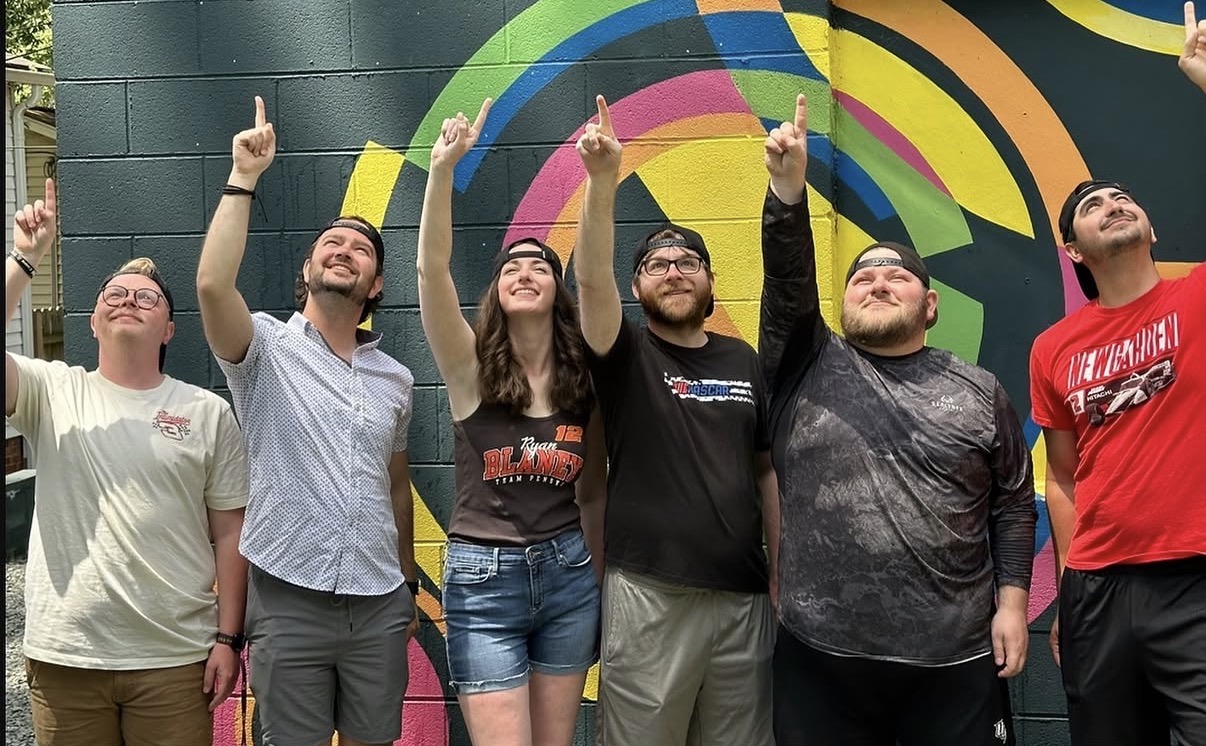
Heading into 2021, I was trying to find my way back into the world after losing my community when I left college in 2019. That’s when I connected my love of media with NASCAR and created Above The Yellow Line with the simple goal of finding purpose in my passions and building a community around a sport I love. I always looked forward to watching the races each weekend. It was something that helped on my worst days, and something that gave me joy and purpose when I felt lost. I was thrilled to find and create an outlet to grow that genuine love into something that has build lifelong friendships.
I went back to school and, after many major changes, graduated with a Bachelor of Science in Journalism, specializing in broadcasting, with a minor in sports issues and media management. My health wasn’t perfect, and I still had plenty of bad days, but I had regained enough of my health to complete my degree and take part in experiences that helped me advance my career and grow my skill set.
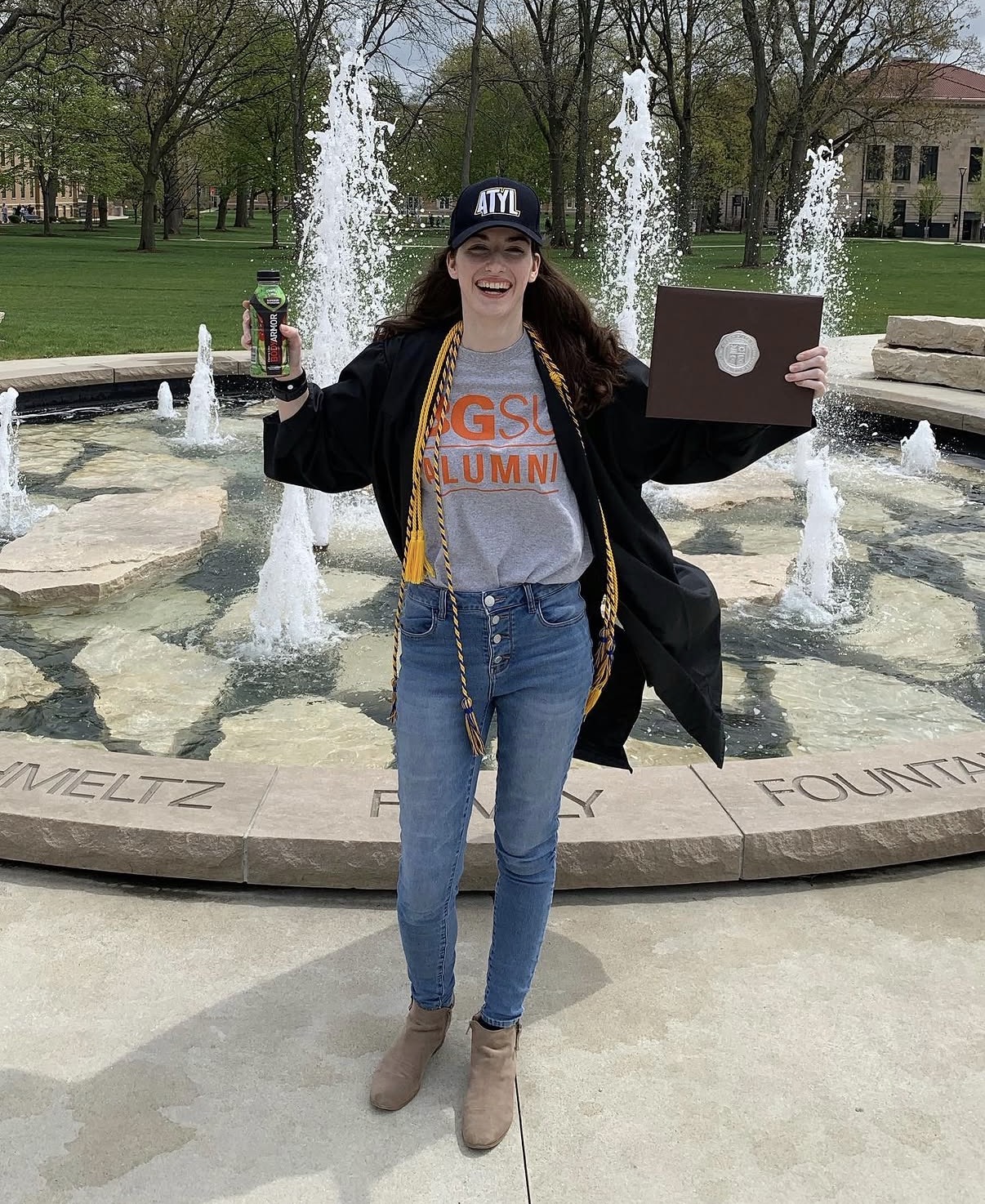
For the first time in years, I felt like I was moving forward rather than simply trying to survive.
Now, after years of building confidence in myself, learning to feel safe in my body during the scary moments, and building a strong support system, I’ve taken the leap forward. I live states away from home, chasing my dreams in North Carolina and covering the sport I love, the sport that helped bring me back to life.
Every detour has a lesson
Again, not every day is perfect. With any chronic health condition, the situation is constantly evolving and management is a moving target. However, with the great care team I’ve established at my new home, it’s made the scary times much easier to manage.
What I can say about this journey is, without the hardship, I wouldn’t be who I am today. Living with a chronic condition has taught me to be resilient. I learned to stand up for myself and to not give up. This experience has taught me to be aware of my body and to affirm my boundaries to protect my health. I’ve also learned that there are no limits to what I can do. Perhaps the most important lesson of them all, nothing defines you unless you say allow it to.
I often jest that because my middle name is “Hope”, giving up is not an option; a sweet irony of life that this middle name would come to mean more to me than letters on a piece of paper.
So, while the past several years have been some of the toughest of my life, with health issues continuing to come and go, I wouldn’t trade the journey for anything.

All in all, this story, featured on a racing-centric website, might not really be about racing at all, at least, not directly. But it’s a story worth sharing. The hope is that others can find their passion, discover their heart, and find the courage to advocate for themselves and fight for a better tomorrow.
Lastly, but certainly not least, a ‘thank you’ to family. The path I walk now would not be possible without the people I love. I am incredibly grateful for the support of my family, friends, and teammates every single day. I would not be where I am today without you all.
Hopefully, throughout the month of October, we can come together to raise awareness about dysautonomia. Most importantly, to help others who may still be searching for answers know that they are not alone.
Donate to Dysautonomia International today:
Additional resources:
Click the image to get your ATYL Dysautonomia International Awareness Month hats today (all net proceeds go to Dysautonomia International):